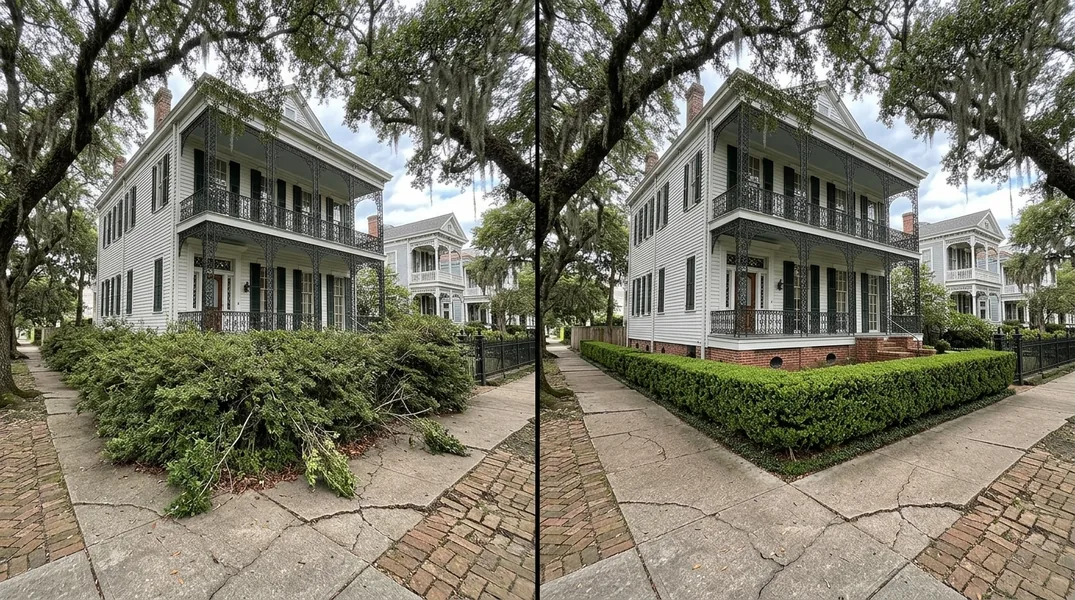
Immediate Safety Steps After a Tree Falls on Your Property
When a tree falls during or after a storm in New Orleans, your first instinct might be to grab a chainsaw and start clearing debris. However, safety must come first. A fallen or severely damaged tree can pose serious hazards that aren't always obvious at first glance. Downed power lines, unstable branches, and weakened limbs can all cause injury or electrocution if you're not careful.
Before attempting any cleanup, visually inspect the area for hazards. Check whether the tree is touching any power lines, which is an immediate danger sign requiring you to contact your utility company and stay clear of the area entirely. If the tree has fallen across your roof, driveway, or vehicle, avoid walking underneath it or attempting to move it yourself. Instead, document the damage with photos for your insurance claim and call professionals immediately. Even if the tree appears stable, it may have root damage or structural weaknesses that could cause it to shift or collapse further without warning.
When to Call Emergency Tree Service Near Me
Emergency Tree Service should be your first call in several critical situations. If a tree has fallen on your home, blocked your only exit, damaged your roof, or landed on a vehicle, you need professional help immediately. Similarly, if large branches are hanging precariously over your property or a neighbor's, or if the tree is leaning dangerously against your house, don't wait for it to fall completely. Storm-damaged trees are unpredictable, and what looks manageable today could become a major hazard tomorrow as wood dries and weakens further.
New Orleans Tree Service provides 24/7 emergency response for situations exactly like these. Our certified arborists understand the unique challenges that New Orleans weather creates, including hurricane-force winds and heavy rainfall that destabilize even mature trees. We have the equipment, expertise, and insurance to handle dangerous removals safely and efficiently. When you call (504) 949-0844, you're reaching professionals who have responded to countless storm emergencies and know how to prioritize your safety and property protection.
Understanding Hurricane Tree Damage and Insurance Coverage
Hurricane tree damage is one of the most common insurance claims filed by homeowners across Louisiana. However, understanding what your policy actually covers can be confusing. Most homeowners insurance policies cover tree removal and damage caused by storms, but the coverage varies significantly depending on your specific policy, your deductible, and how the tree fell. If a tree falls on your house due to a storm, that damage is typically covered. However, if a tree falls simply because it was diseased or poorly maintained, your insurer may deny the claim, arguing it was a maintenance issue rather than a weather event.
The key to a successful claim is documentation and prompt action. Take clear photos of the fallen tree, the damage it caused, and the surrounding area immediately after the storm passes. Document the weather conditions that day, including wind speed if available from local weather reports. Contact your insurance company as soon as possible, ideally within 24 to 48 hours, to report the damage. When the adjuster visits, be prepared to explain what happened and provide evidence that the tree was healthy before the storm struck. This is where having a professional assessment from a certified arborist can strengthen your claim. New Orleans Tree Service can provide documentation of tree condition and the cause of failure, which insurers often value when evaluating claims.
Filing Your Insurance Claim for Storm-Damaged Trees
Filing an insurance claim for fallen tree damage requires organization and attention to detail. Start by reviewing your homeowners insurance policy to understand your coverage limits, your deductible, and any exclusions that might apply. Some policies have separate deductibles for tree damage, which might be higher than your standard deductible. Once you understand your coverage, contact your insurance agent or company to report the claim. Most insurers have a deadline for reporting damage, typically within 30 days of the incident, so don't delay.
When you file your claim, provide the insurer with a detailed account of what happened, including the date and time of the storm, the type of tree, and exactly what damage occurred. Include your photos and any documentation from professional services. If you hired a company for Tree Removal, keep all invoices and receipts as proof of expenses. Many insurers will send an adjuster to assess the damage, so ensure the property remains accessible and the tree remains in place for their inspection unless it poses an immediate safety risk. If the adjuster's assessment seems low or you disagree with their determination, you have the right to request a second opinion or dispute the claim. Having professional documentation from a certified arborist supporting your position can make a significant difference in the outcome.
Tree Removal Cost in New Orleans: What to Budget
The cost of emergency tree removal varies based on several factors, including tree size, location, complexity of the job, and the extent of damage. A small tree in an open yard might cost significantly less than a large oak that has crashed through your roof or landed near power lines. Storm-damaged trees often cost more to remove safely because the wood may be unstable, requiring additional equipment and careful rigging to prevent further damage. When you need pricing information, it's important to get multiple quotes from reputable companies so you can compare services and costs.
New Orleans Tree Service offers transparent pricing and a free estimate for emergency tree removal. When you call (504) 949-0844 or request an estimate online, our team will assess your specific situation and provide an accurate quote. Keep in mind that emergency removal costs may be higher than routine removals due to the urgency and complexity involved. However, many homeowners find that their insurance covers a significant portion of the cost, especially if the tree damaged their property. After removal, you might also consider Stump Grinding to fully reclaim your yard space and prevent regrowth.
Preventing Future Storm Damage: Tree Maintenance and Trimming
While you can't prevent storms, you can reduce the risk of tree damage by maintaining your trees properly. Regular Tree Trimming & Pruning removes weak branches, improves tree structure, and reduces wind resistance during storms. Trees with dense canopies and weak branch attachments are more likely to fail in high winds. Professional arborists can identify structural weaknesses and recommend corrective pruning before a storm strikes. This proactive approach is far less expensive than emergency removal and can save your home from damage.
If you have trees on your property that survived a recent storm but show signs of damage like cracked branches, torn bark, or leaning trunks, have them inspected by a professional immediately. Early intervention can sometimes save a valuable tree and prevent it from becoming a hazard later. New Orleans Tree Service can assess your trees and recommend the best course of action, whether that's corrective pruning, monitoring, or removal. Regular maintenance is an investment in your property's safety and value. To schedule a consultation and discuss your tree care needs, contact New Orleans Tree Service today or call (504) 949-0844 for immediate assistance.
Looking for a professional tree service in New Orleans? New Orleans Tree Service responds fast for all your tree service needs.
Get a Free QuoteOur services: Tree Removal · Tree Trimming & Pruning · Stump Grinding